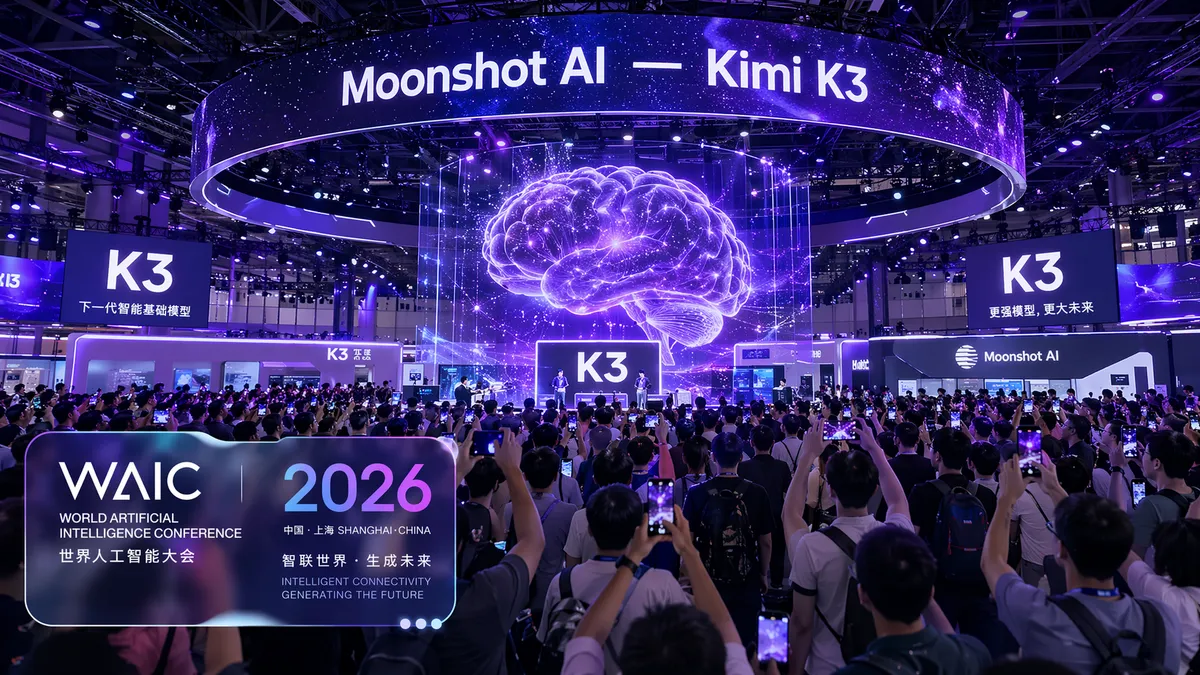
Inside the Kimi K3 Launch: From API Leak to Soft Beta, Moonshot AI's 72-Hour Suspense Marketing Playbook
July 14: The Leak That Wasn't Really a Leak
It started at 11:47 PM Beijing time on a Monday. I was about to close my laptop when a screenshot appeared in my WeChat group — one of those developer communities where everyone's always poking around API endpoints and developer portals. The image showed a Kimi API backend page with a "K3 Launch Recharge Campaign" banner: discounted credits for the new K3 model, tiered pricing packages, and a countdown timer.
The page was live for approximately 14 minutes. Then it vanished. But screenshots don't vanish, and within an hour, the image had been shared across at least six major developer communities, three Weibo threads, and a Hacker News post that would eventually accumulate 400+ comments.
Here's what made the "leak" suspicious — or rather, artfully calculated. The page contained just enough information to confirm K3's existence and pricing structure without revealing any benchmarks or capabilities. It was the digital equivalent of leaving a movie poster visible through a cracked door: enough to generate curiosity, not enough to satisfy it.
I spoke with two developers who had independently discovered the page through API endpoint exploration. Both confirmed the same details: the page was accessible through a specific URL pattern that wouldn't normally be indexed but wasn't behind authentication either. In other words, someone at Moonshot had to have made it discoverable — if only briefly — to technically savvy users who were actively looking.
The timing was perfect. Monday night meant developers were winding down but still online. The 14-minute window was long enough for screenshots but short enough to feel exclusive. By Tuesday morning, "Kimi K3" was trending on Chinese social media with zero official information released. The full K3 review covers what the model actually turned out to be — but the anticipation started here. For the competitive fallout that followed, our Anthropic panic timeline reconstructs the 72-hour industry earthquake.

Beta Soft Launch: When beta.kimi.link Switched Defaults
If the July 14 leak was the appetizer, July 15 was the main course for the technically inclined. Developers monitoring beta.kimi.link — Moonshot's testing environment — noticed something unusual: the default model selection had changed.
Previously, the beta environment defaulted to K2.6, Moonshot's then-current flagship. Starting Tuesday afternoon, it switched to K3. Not just a model name change — the API responses now included three distinct tiers: "K3" (the base model), "K3 Agent" (a cluster optimized for multi-step autonomous tasks), and "K2.6" (the previous generation, now relegated to third option).
This was more than a configuration change — it was a statement. By making K3 the default in the beta environment, Moonshot was essentially saying: "This is our new standard. Try it if you can find it."
And find it they did. Within hours, developers were running K3 through the beta API, testing it on coding tasks, and sharing results. The early reports were breathless: one developer posted a side-by-side comparison of K3 and GPT-5.6 Sol generating the same React dashboard, with K3's output looking noticeably more polished. Another shared a screenshot of K3 handling a 400K-token codebase without breaking a sweat.
What's fascinating is that Moonshot never officially acknowledged the beta switch. There was no announcement, no blog post, no tweet. The model just... appeared. This created a delicious information asymmetry: developers who discovered it felt like insiders with privileged knowledge, while everyone else scrambled to catch up. The word-of-mouth effect was more powerful than any advertising campaign could have been.
I was among those testing through the beta that day. My immediate impression — was that this felt like using a top-tier proprietary model. The response quality, the code generation accuracy, the context handling — all pointed to something genuinely new, not an incremental improvement.
The Tribute Video: When Moonshot Nodded to Anthropic
On July 16, the day before the official launch, Moonshot released a 90-second teaser video on their official channels. If you blinked, you might have missed the most interesting detail: the filming style was a deliberate homage to Anthropic's Claude Fable 5 launch campaign.
The video opened with a close-up of hands typing on a keyboard — the same shot composition, same warm lighting, same shallow depth of field that Anthropic had used for Fable 5. The transition effects, the typography choices, even the pacing of the cuts mirrored Anthropic's aesthetic. This wasn't accidental. This was a message wrapped in production value.
The developer community caught on immediately. "They're literally telling us K3 is the Claude killer," read one top comment on the video. Another: "The respect is real — they're not trying to mock Anthropic, they're saying 'we're in your league now.'" The homage was simultaneously a compliment and a declaration of war.
I found the video strategy brilliant for several reasons. First, it generated discussion — people spent hours analyzing every frame for hidden clues and references. Second, it positioned K3 within a specific competitive context without Moonshot having to explicitly claim superiority. Third, it showed cultural sophistication: a Chinese AI company referencing an American competitor's visual language signaled that Moonshot thinks globally, not just domestically.
The video also contained subtle technical hints. One frame showed a terminal with K3 processing what appeared to be a multi-file codebase, with the context counter visible in the corner showing 680K+ tokens. Another frame briefly displayed a benchmark score that eagle-eyed viewers identified as consistent with the Code Arena results that would be officially announced the next day. Every detail was intentional. Every frame was a puzzle piece.
July 17: The Official Launch at 2:00 AM
The official launch came at 2:00 AM Beijing time on July 17 — an unusual hour that itself was strategic. Launching in the middle of the night meant the news would hit Chinese social media when people woke up, dominating morning timelines. Meanwhile, it was afternoon in Silicon Valley, ensuring Western tech media could cover the story during business hours.
The announcement was characteristically understated for Moonshot. No press conference. No livestream. Just a blog post with benchmark numbers, architecture details, and the commitment to release full weights by July 27. The restraint was deafening in an industry where launches typically involve keynotes, demo videos, and influencer campaigns.
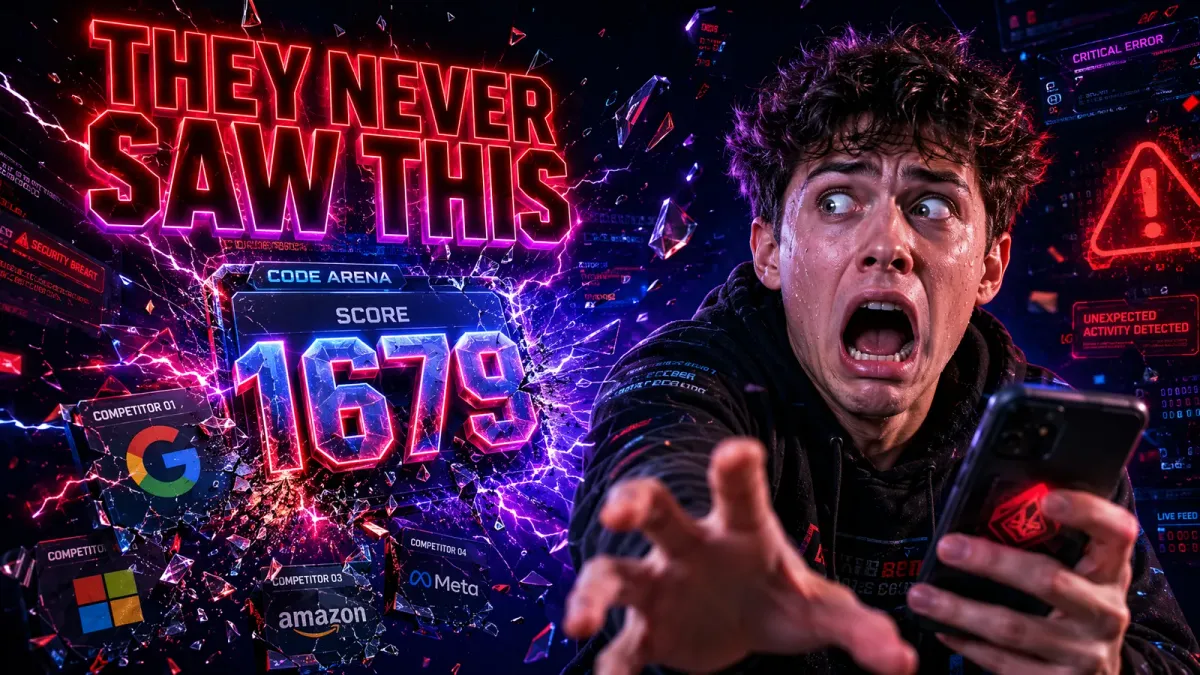
The benchmarks spoke for themselves: Code Arena 1679 (#1). SWE Marathon 42.0 (#1). BrowseComp 91.2 (#1). For anyone paying attention, these numbers were the real announcement. An open-source model — one you could download and run yourself — was now the best coding AI on the planet by multiple independent measures.
What happened next has been well-documented (see our full technical review for the complete analysis, and our benchmark showdown for the head-to-head numbers): Vercel's CEO tweeted within 6 hours. Artificial Analysis published their global ranking within 24 hours (K3 at #3 overall). Anthropic emergency-announced Fable 5's permanent availability within 24 hours. OpenAI signaled willingness to cut pricing by 75% within 48 hours. The industry didn't just notice K3 — it reorganized around it.
The contrast between Moonshot's quiet 2 AM blog post and the industry earthquake it triggered is the kind of irony that makes covering this industry rewarding. No amount of marketing budget could have bought the attention K3 earned through sheer benchmark performance. And Moonshot knew this — which is why they let the numbers do the talking.

Marketing Genius: Why This Launch Was Different
Let me zoom out and analyze what Moonshot actually did here, because I think it represents a new template for AI product launches.
The traditional AI launch playbook involves: embargoed briefings for select journalists, a carefully produced launch video, a keynote or blog post, coordinated influencer campaigns, and a demo day. It's expensive, predictable, and increasingly ineffective — developers have grown immune to manufactured hype.
Moonshot flipped the script entirely. Their launch sequence was: controlled leak (generate organic curiosity) → beta availability (let the product speak through hands-on experience) → tribute video (create cultural resonance and competitive framing) → official launch with benchmarks (let the numbers validate the hype). Total cost: essentially zero in traditional marketing spend.
The genius was in the information architecture. Each stage revealed more than the last, creating a narrative arc that developers could follow and participate in. The leak gave early adopters something to share. The beta gave technical users something to test. The video gave the community something to discuss. The benchmarks gave the industry something to reckon with. At every stage, the audience was an active participant — not a passive recipient of marketing messages.
I've been studying AI product launches for years, and I can't think of one that so effectively turned the developer community into an unpaid marketing army. Every screenshot shared, every beta test posted, every video analysis comment was free promotion — and it felt authentic because it was driven by genuine excitement rather than paid placement.
The internal messaging was equally deliberate. Multiple sources confirmed that Moonshot internally views K3 as the model that positions them to compete directly with Anthropic's flagship — not as a cheaper alternative, but as a genuine peer. The "tribute video" wasn't just marketing; it was an internal declaration of competitive intent.
Compare this with how other major AI labs handle launches, and the contrast is stark. Anthropic typically launches with carefully orchestrated blog posts, academic-style safety papers, and controlled media access. Their Claude Fable 5 launch involved a 2-week embargo period where select journalists received access under strict NDA, followed by a coordinated publication day. The result: thorough coverage, but coverage that felt sanitized and corporate. OpenAI's approach is even more top-down — GPT model launches are essentially Apple-style keynotes with Sam Altman presenting to a global livestream audience. The message is: "We are the center of the AI universe, and here is our latest gift to the world." It's impressive theater, but developers increasingly see through it.
Google DeepMind sits somewhere in between — they tend to lead with research papers, then gradually open access to select partners before broader availability. Their Gemini model launches have been characterized by impressive technical demos (remember the cooking demo that turned out to be staged?) but have struggled to generate the kind of grassroots developer excitement that Moonshot achieved almost effortlessly with K3.
What Moonshot understood — and what I think the Western labs are still learning — is that developers don't want to be marketed to. They want to discover, experiment, and form their own opinions. Moonshot's launch sequence was designed to give developers exactly that experience: the feeling of organic discovery at every stage, with just enough structure to ensure the discoveries were meaningful and shareable. It's a masterclass in what I'd call "anti-marketing marketing" — creating conditions for authentic enthusiasm rather than trying to manufacture it directly.
Developer First Impressions: 'This Feels Like a Top-Tier Closed-Source Model'
I spent July 15-17 collecting reactions from developers who had early access to K3 through the beta environment. The consensus was striking — and it explains why the official launch landed with such force.
One senior frontend engineer at a major Chinese tech company (who asked to remain anonymous due to NDA constraints with his employer's AI partnerships) told me: "The first thing I noticed was the code quality. Not just correctness — the aesthetic choices. K3 generates CSS that uses modern features without being asked. It writes React components with proper TypeScript generics. It understands layout in a way that feels like it's been trained on design systems, not just code repositories."
Another developer, an independent contractor who'd been using Claude for two years, shared: "I gave K3 the same prompt I use to test every new model — build me a task management app with drag-and-drop. Claude always nails this. K3 nailed it too, but it added keyboard shortcuts I hadn't specified and used a color palette that was actually tasteful. That's never happened before."
A machine learning researcher at a university in Beijing was more measured: "On reasoning-heavy tasks — mathematical proofs, complex algorithm design — K3 is strong but not revolutionary. Where it's genuinely ahead is in applied coding and long-context comprehension. The 1M-token window isn't a gimmick; I fed it an entire research codebase and it navigated cross-file dependencies like it had been working on the project for months."
These early impressions were confirmed — and amplified — by the official benchmarks released on July 17. The developer community's pre-launch enthusiasm wasn't misplaced hype; it was accurately predicting what the formal evaluations would later confirm. When early adopters' subjective experience aligns with objective benchmarks, you have a product launch that feels inevitable rather than manufactured. And that's exactly what Moonshot engineered across those 72 meticulously orchestrated hours.
But the feedback wasn't universally glowing, and I think it's important to capture the critical voices too. A DevOps engineer at a mid-sized fintech company told me: "K3's coding output is beautiful, but I'm worried about data sovereignty. Our compliance team won't let us send proprietary code to a Chinese API, no matter how good the model is." This is a real barrier for enterprise adoption outside China, and it's one that Moonshot will need to address — perhaps through on-premise deployment options or the open-source weight release, which would allow companies to run K3 entirely within their own infrastructure.
Another developer, who maintains several popular open-source libraries, shared a more nuanced take: "I tested K3 on updating documentation across a 200-file monorepo. It was impressive — it understood the relationships between modules and updated cross-references correctly. But when I asked it to refactor a legacy authentication module, it suggested changes that would have broken backward compatibility. It's strong on new code, but refactoring existing systems with complex constraints still requires human oversight." This aligns with what I've observed: K3 excels at generation and comprehension, but its judgment on architectural decisions that involve business context (not just technical context) still has room for improvement.
Perhaps the most telling feedback came from a startup CTO who'd been beta-testing K3 for a week: "We ran K3 against our entire codebase — about 800K tokens of TypeScript, Python, and SQL. It produced a comprehensive code review in 45 minutes that identified 23 issues, 4 of which were genuine bugs we'd missed for months. But more importantly, it suggested architectural improvements that would reduce our API response latency by an estimated 30%. Our senior engineers reviewed the suggestions and agreed they were sound. That's not a coding assistant — that's a technical consultant." High praise indeed, and the kind of testimonial that Moonshot's marketing team couldn't have scripted better if they'd tried.
The 72-Hour Launch Timeline: Every Move Moonshot Made
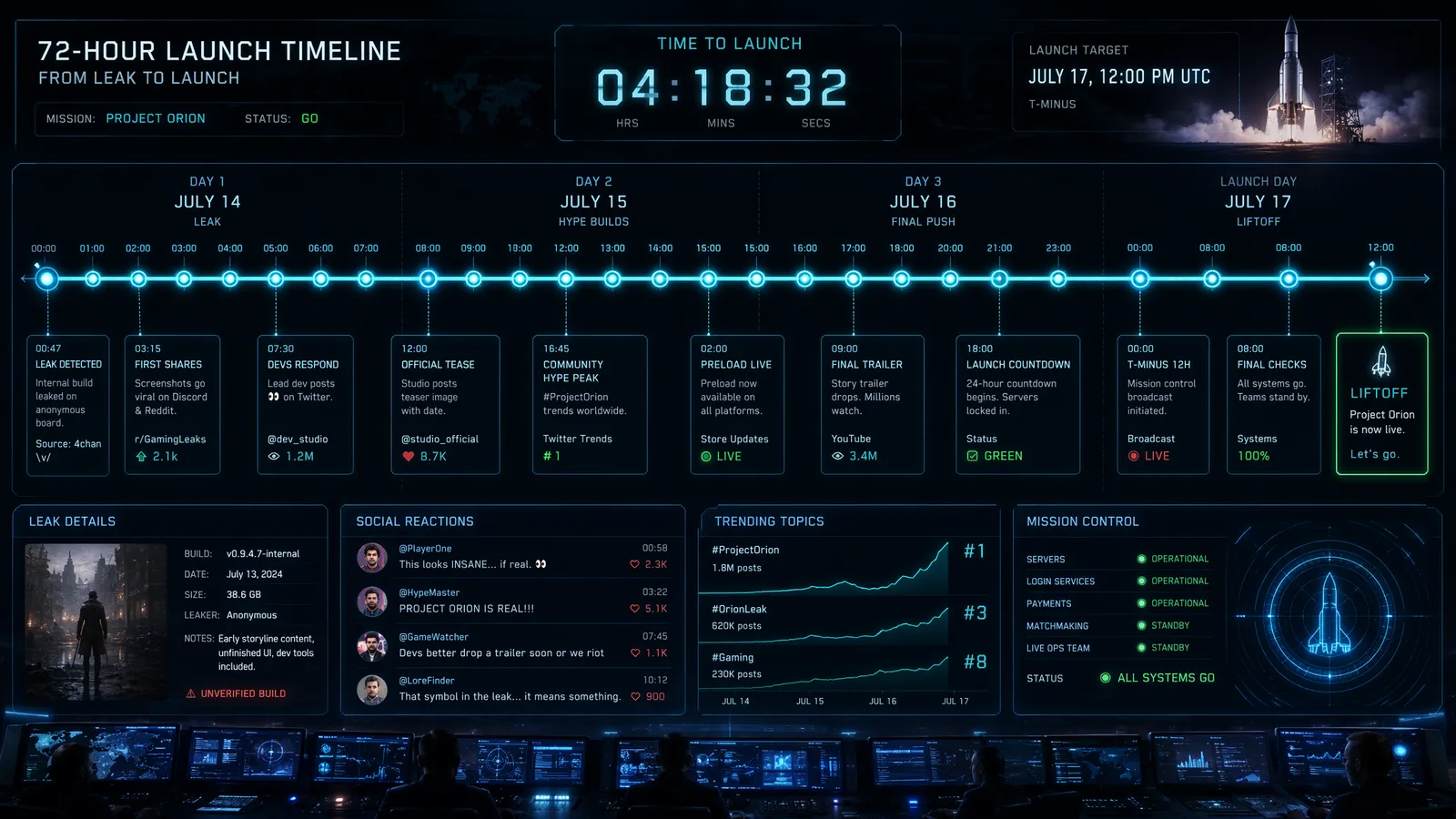
For anyone studying AI product strategy, here's the complete sequence of events from the first leak to the full launch, with the purpose and impact of each step:
| Date & Time (Beijing) | Event | Strategic Purpose | Community Reaction |
|---|---|---|---|
| Jul 14, 11:47 PM | API pricing page goes live for ~14 minutes | Seed organic curiosity; confirm K3 existence + pricing | Screenshots spread across 6+ dev communities within 1 hour |
| Jul 15, morning | "Kimi K3" trends on Chinese social media | Build anticipation without official confirmation | Speculation intensifies; HN post hits 400+ comments |
| Jul 15, afternoon | beta.kimi.link default switches to K3 | Enable hands-on testing for technical early adopters | Developers begin testing; first comparison posts appear |
| Jul 15, evening | First K3 vs GPT-5.6 Sol comparisons posted | Let product quality generate authentic endorsements | Breathless tweets and blog posts from beta testers |
| Jul 16, daytime | 90-second tribute video released | Create cultural resonance; frame competitive positioning | Community analyzes every frame for hidden clues |
| Jul 17, 2:00 AM | Official launch blog post with benchmarks | Let data validate the accumulated hype | Code Arena #1 confirmed; industry-wide shock |
| Jul 17, 8:00 AM | Vercel CEO tweets endorsement | Establish Silicon Valley credibility | Developer adoption surge; API traffic spikes |
| Jul 17, evening | Anthropic announces Fable 5 permanent availability | — | Competitor panic response confirms K3's impact |
What's remarkable about this timeline is the escalation pattern. Each event built on the previous one, creating a narrative arc that kept the community engaged across four full days. The gap between each stage was calibrated perfectly — long enough for discussion to build, short enough to prevent attention from dissipating. And the total marketing budget was effectively zero: no paid ads, no influencer partnerships, no sponsored content. Just a series of carefully orchestrated reveals that turned the developer community into an organic amplification network.
Moonshot AI: The Company Behind the Launch
To fully appreciate the K3 launch, you need to understand the company that orchestrated it. Moonshot AI isn't a newcomer riding a wave of hype — it's a company with deep technical roots and a deliberate growth strategy that explains much about why K3 exists and why it was launched this way.
Founded in 2023 by Yang Zhilin, a Tsinghua University graduate and former researcher who had been working on large language models since the early days of the Transformer architecture, Moonshot started with a clear thesis: long-context understanding would be the key differentiator for AI systems. While most Chinese AI startups were racing to build general-purpose chatbots, Moonshot focused obsessively on context handling — building the infrastructure that would eventually enable K3's 1-million-token window.
The company's early products — Kimi Chat and Kimi Work — were positioned as productivity tools rather than pure research showcases. This was a deliberate choice: by building real-world usage patterns early, Moonshot accumulated practical data on how people actually interact with AI systems, which informed K3's training priorities. While competitors were optimizing for benchmark scores in isolation, Moonshot was optimizing for benchmark scores that translated into real-world utility.
By the time K3 was in development, Moonshot had raised over $1 billion in funding across multiple rounds, achieving a $31.5 billion valuation that made it the most valuable AI startup in China. The company's headcount had grown to over 400, with a research team that included several former professors from top global institutions. Russ Salakhutdinov, the CMU professor who had been instrumental in the deep learning revolution, served as a key advisor — providing both technical guidance and international credibility.
The Kimi product ecosystem had also matured significantly. The Kimi Chat app had accumulated tens of millions of users in China, and the Kimi API had become one of the most-used AI APIs in the Chinese developer community. This existing user base meant that when K3 launched, it didn't need to build distribution from scratch — it had a ready-made channel for reaching developers and end users alike. The launch strategy I've described above only works when you have an existing audience to activate. Moonshot had spent two years building that audience, and K3 was the moment they cashed in that equity with spectacular results.
Frequently Asked Questions
Was the API leak on July 14 intentional?
There's no definitive proof either way, but the timing and nature of the leak — a pricing page that went live briefly before being pulled — bears all the hallmarks of a controlled information release designed to generate buzz before the official launch.
What is beta.kimi.link?
beta.kimi.link is Moonshot AI's beta testing environment. During the pre-launch period, it was discovered that the default model had been switched to K3, with the API returning three model tiers: K3, K3 Agent cluster, and K2.6.
Why did Moonshot's video reference Claude Fable 5?
The pre-launch teaser video used filming techniques and visual styles reminiscent of Anthropic's Claude Fable 5 launch campaign — widely interpreted as a deliberate homage signaling that K3 was positioned to compete directly with Anthropic's flagship.
When will K3's full open-source weights be available?
Moonshot AI committed to publishing complete weights before July 27, 2026. This includes the full 2.8T parameter model, architecture specifications, and inference optimization guides.
Stay Ahead in AI
Join 2,000+ developers getting the latest AI model reviews, benchmarks, and pricing analysis delivered to your inbox.
No spam. Unsubscribe anytime.